



Wearable Devices in Healthcare: Material Solutions
Continuous Glucose Monitor Materials
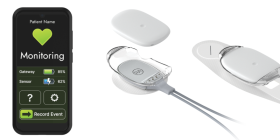
CGMs represent the convergence of healthcare and consumer electronics, demanding both clinical reliability and fashion-forward design. Makrolon® polycarbonate enables the thin-walled precision housings these miniaturized devices require, with biocompatibility, toughness, and colorability that let OEMs differentiate on aesthetics. On the skin side, Platilon® TPU films provide breathable, hydrolysis-resistant substrates with excellent adhesive anchorage, enabling extended wear times essential for accurate multi-day glucose tracking. Together, our materials address the full CGM architecture. - Managing Healthcare with Consumer Electronics | Covestro


Smart Patch & Remote Patient Monitoring
Electronic skin patches and wearable sensors enable continuous monitoring of vital signs including ECG, heart rate, SpO₂ and blood pressure, directly on the body. Platilon® TPU films provide soft, breathable, stretchable substrates for printed electronics that move with the skin and remain comfortable for days. Baymedix® low-trauma adhesives secure patches while supporting gentle removal, while thermoformable Baymedix® foams embed electronics without rigid hard-shell housings. The result: clinical accuracy and patient comfort in a thin, lightweight form factor. - Advanced materials for a patient-centric electronic skin patch | Covestro


Wearable Drug Delivery Devices
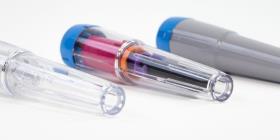
Biologic therapies increasingly require large-volume, slow-infusion delivery that patients self-administer at home via body-worn injectors. Makrolon® Rx medical-grade polycarbonate delivers the transparency, impact resistance, and dimensional stability these housings demand, while low-friction grades ensure smooth, accurate dosing mechanisms without external lubricants. Bayblend® PC+ABS blends offer additional chemical resistance for components exposed to drug formulations. Our materials help device designers balance patient safety, dose accuracy, and wearable comfort in a single system. - Drug delivery | PU, PC, PC+ABS blends and TPU by Covestro | Covestro AG | Covestro


Printed Electronics in Healthcare Wearables
Printed electronics are transforming wearable healthcare by enabling ultra-thin, flexible circuits that conform to the body. Platilon® TPU films serve as the ideal substrate — printable with conductive silver inks, compatible with roll-to-roll manufacturing, and engineered to bend, stretch, and return to shape over thousands of cycles. Our multilayer film portfolio offers tailored solutions for printing, curing, encapsulation, and skin fixation. As one of the first ether-based TPU substrates on the market, Platilon® delivers the hydrolysis stability required for humid on-body environments. - Platilon® in next-gen ECG | Covestro & Printed electronics | Covestro

Remote Cardiac Monitoring Devices
Remote cardiac monitors track heart rhythms outside clinical settings, improving arrhythmia detection and reducing hospital readmissions. Makrolon® 2458 polycarbonate delivers toughness, biocompatibility, and design flexibility for wearable monitor housings, while Platilon® TPU films provide breathable, stretchable substrates for ECG skin patches with printed conductive circuits. Together, these materials enable devices to be comfortable for multi-day wear yet durable for daily use, helping clinicians capture accurate data without compromising patient compliance. - Transforming Cardiac Care with Polycarbonate | Covestro

FAQs
What material solutions support miniaturization and thin-wall design in Continuous Glucose Monitors (CGMs)?
Makrolon® polycarbonate has already demonstrated its versatility in micromolding, making it a natural fit for devices designed with miniaturization in mind. Makrolon® Rx2235 medical-grade polycarbonates delivers the high flow needed to fill ultra-thin walls and accurately replicate intricate micro-features without needing excessive pressures, enabling smaller, lighter CGM housings without sacrificing mechanical integrity. This grade is biocompatible per ISO 10993 and compatible with gamma, e-Beam, and ETO sterilization, supporting the full range of CGM manufacturing requirements.
How do low-trauma skin adhesives reduce irritation upon removing remote monitoring devices?
Adhesives that use Baymedix® polyurethane adhesive systems can be engineered to adhere strongly, but also offer gentle, low-trauma removal to release cleanly from the skin without pulling hair or causing sensitization, even after days of continuous wear. Their urethane chemistry assures excellent breathability, and when combined with a suitable film substrate like Platilon® urethane film, can support moisture management underneath the patch with minimal or no perforations. Moisture management is a critical element to maintaining skin health during extended wear periods.
Which biocompatible polycarbonate grades are suitable for housing on-body drug delivery injectors?
Makrolon® M204 LF, M402 LF, and M404 LF are medical-grade, low-friction polycarbonates that deliver smooth, consistent deployment forces while potentially eliminating the need for external lubricants. Each is tailored to meet the particular needs of the device, whether a device requires maximum miniaturization, lowest possible friction, or some combination thereof. All of these are biocompatible per certain ISO 10993 criteria and sterilizable via autoclave, ETO, e-Beam, or gamma. Additionally, for components demanding higher stiffness and strength, glass-reinforced grades such as the Makrolon® M810 GF and M410 GF families provide excellent dimensional stability for precise component fit in autoinjectors and injection pens.
What substrates provide high flexibility and stretchability for printed electronics in healthcare?
Platilon® thermoplastic polyurethane (TPU) films are purpose-built substrates for flexible printed electronics, offering superior stretchability, reliable shape recovery over high cycles, and proven printability with both standard and conductive inks such as silver-based formulations. Available in biocompatible, skin-contact medical grades that are ETO and gamma sterilizable, these films enable seamless sensor integration for applications ranging from smart patches and real-time blood glucose monitoring to heart rate monitoring and ostomy leak detection.
Which polymers offer chemical resistance against complex drug formulations?
Makroblend® PC+PBT blends such as M525 and M4000 FR deliver broad chemical resistance against disinfectants, cleaning agents, and aggressive drug formulations while maintaining the impact strength and – in the case of M4000FR - flame retardancy that device housings require. For flexible components like tubing and connectors that are often part of drug delivery systems, Desmopan® Rx medical-grade TPU provide excellent chemical resistance against oils and disinfectants combined with biocompatibility for direct patient contact, and available in various hardnesses and contain no plasticizers.