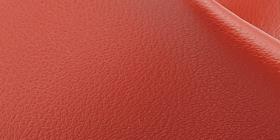
Flexible and conductive smart textiles with Impranil® PUDs
FILK Freiberg Institute and OUT e.V. used water-based Impranil® polyurethane dispersions (PUDs) from Covestro to develop conductive textile compounds with high elongation and flexibility, enabling sensor-integrated smart textiles for applications such as neonatal phototherapy bodysuits.
Why is conductive functionality needed for smart textiles?
Conventional smart textiles rely on embedded electronics that could limit flexibility and design freedom, but the smart textiles market is rapidly growing across healthcare wearables, personal protective equipment, sportswear, and automotive interiors.
Funded by Germany’s Industrielle Gemeinschaftsforschung (IGF), FILK and Optotransmitter-Umweltschutz-Technologie (OUT e.V.) collaborated to develop polymer-based conductive textile compounds with a broad potential field. These compounds allow for flexible electronics to be implemented directly into textile materials – eliminating conventional wiring and delivering more scalable, flexible smart textile composites.
Challenge
How can smart textiles combine conductivity and flexibility?
FILK and OUT e.V. aimed to develop textile compounds combining reliable conductivity with high elongation and flexibility at scale. This would create a continuous electrical potential field across the textile surface and enable free placement of electronic components such as LEDs and sensors for wearables with active, intelligent control.
One key application was a sensor-controlled neonatal jaundice bodysuit for phototherapy. Current treatments rely on blue light (~455 nm) in hospital incubators. A flexible bodysuit integrating LEDs and sensors could continuously monitor and adjust therapy in real time, enabling outpatient treatment.
How do Impranil® PUDs enable conductive smart textiles?
Using water-based Impranil® PUDs from Covestro with carbon nanotubes (CNTs) as conductive additives, FILK and OUT e.V. developed flexible conductive textile coatings enabling smart textiles. The electrical properties of the conductive layer were refined by laser structuring, resulting in an energy efficient potential field, allowing LEDs and sensors to be distributed freely across the textile surface without traditional wiring. Active control, real-time monitoring and bidirectional communication are key features of the smart textile.
Beyond neonatal phototherapy bodysuits, Impranil® PUD-based formulations can support smart textile applications across sportswear, cosmetics, automotive, protective wear occupational equipment and more.
Our partners
Key benefits
Flexible: High-elongation conductive films maintain performance under mechanical stress.
Conducts uniformly: Potential field enables wiring-free integration of LEDs and sensors.
Smart functionality: Supports real-time sensing, control, and communication within textile systems.
Versatile: Suitable for healthcare, sportswear, automotive, and IoT wearable applications.
Water-based: Impranil® PUDs support digital printing and scalable manufacturing.









.jpg?h=140&w=280&rev=06b6a249fa924b5aac3da23d73d3fd02&hash=347F217EBFD4FEFE2B04ABBD5AC0412B&usecustomfunctions=1¢ercrop=1)