




Case study
How concept car The Centum achieved responsive functional surfaces
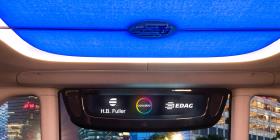
For its new concept car The Centum, Marquardt Group designed a door panel combining a premium look and feel with adaptive functionality. Thanks to the collaboration with E Ink and Covestro, they created a haptic surface with color changing effects seamlessly embedded in the interior design.
As a leading supplier of smart mechatronic systems for automotive applications, Marquardt aimed to showcase advanced interior designs in its concept car “The Centum,” combining high-performance automotive surface materials with user-focused functionality.
Automotive surface materials need to offer durability, resistance to hydrolysis, abrasion, and chemicals, low VOC emissions and more.
Besides these high-performance properties, there are also opportunities for automotive interior designs to become even more user-focused by offering more individual design preferences in color and display options.
So, what was Marquardt’s goal for The Centum’s automotive interior design?
Marquardt aimed to develop a door panel element that maintained haptic and visual properties, while seamlessly embedding a responsively adaptable color display directly into the surface.
Automotive surface materials need to offer durability, resistance to hydrolysis, abrasion, and chemicals, low VOC emissions and more.
Besides these high-performance properties, there are also opportunities for automotive interior designs to become even more user-focused by offering more individual design preferences in color and display options.
So, what was Marquardt’s goal for The Centum’s automotive interior design?
Marquardt aimed to develop a door panel element that maintained haptic and visual properties, while seamlessly embedding a responsively adaptable color display directly into the surface.

Marquardt partnered with E Ink to integrate E Ink’s energy-efficient, highly durable e-paper display technology in their designs. The main challenge was to cover the display behind a haptic surface that allows the color effects to be fully visible.
Marquardt turned to Covestro to develop a transparent coated synthetic with appealing haptics, that could also meet stringent standards for abrasion and hydrolysis resistance, flexibility, and durability.
Marquardt turned to Covestro to develop a transparent coated synthetic with appealing haptics, that could also meet stringent standards for abrasion and hydrolysis resistance, flexibility, and durability.
With The Centum, we demonstrate how smart technology can integrate into automotive interior design. Together with E Ink and Covestro, we realized a functional surface interface with a premium look and feel, revealing new possibilities for smart, human-centered automotive interiors.
Covestro developed a transparent coated film based on its water-based INSQIN® PU technology, using Impranil® DLC-F as the basis for the coating formulation. This water-based polyurethane dispersion is often used in topcoats for automotive interior textile coatings.
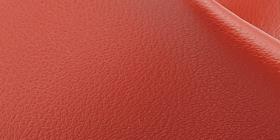
With this formulation, a durable, fully transparent film can be created. In Marquardt’s The Centum car, this preserved the look and feel of PU-coated automotive textiles, while allowing the vivid colors of E Ink’s embedded display to be clearly visible.
With this formulation, a durable, fully transparent film can be created. In Marquardt’s The Centum car, this preserved the look and feel of PU-coated automotive textiles, while allowing the vivid colors of E Ink’s embedded display to be clearly visible.

E Ink’s display technology enables dynamic, energy-efficient visual experiences in places traditional displays cannot reach. Collaborating with Marquardt and Covestro enabled us to integrate such a display beneath an automotive interior surface.
Key benefits
- Transparent: Fully transparent coated synthetic allows E Ink display colors to be clearly visible.
- Authentic haptics: Premium look and feel of PU-coated automotive textiles.
- High-performance: Offers abrasion and hydrolysis resistance, flexibility, and durability.
- Adaptive: Enables responsive color-changing surfaces to be integrated into car interiors.
The Impranil® DLC-F waterborne polyurethane dispersion contributed to a coated film that combines optical clarity – enabling the integration of display functionality – with mechanical durability and tactility.




.jpg?h=140&w=280&rev=06b6a249fa924b5aac3da23d73d3fd02&hash=347F217EBFD4FEFE2B04ABBD5AC0412B&usecustomfunctions=1¢ercrop=1)