How concept car The Centum achieved responsive functional surfaces
For its new concept car The Centum, Marquardt Group designed a door panel combining a premium look and feel with adaptive functionality. Thanks to the collaboration with E Ink and Covestro, they created a haptic surface with color changing effects seamlessly embedded in the interior design.
Reimagine auto interior design with adaptive surfaces
As a leading supplier of smart mechatronic systems for automotive applications, Marquardt aimed to showcase advanced interior designs in its concept car “The Centum,” combining high-performance automotive surface materials with user-focused functionality.
Automotive surface materials need to offer durability, resistance to hydrolysis, abrasion, and chemicals, low VOC emissions and more.
Besides these high-performance properties, there are also opportunities for automotive interior designs to become even more user-focused by offering more individual design preferences in color and display options.
So, what was Marquardt’s goal for The Centum’s automotive interior design?
Marquardt aimed to develop a door panel element that maintained haptic and visual properties, while seamlessly embedding a responsively adaptable color display directly into the surface.
What were the challenges when integrating color-changing elements into automotive interior designs?
Marquardt partnered with E Ink to integrate E Ink’s energy-efficient, highly durable e-paper display technology in their designs. The main challenge was to cover the display behind a haptic surface that allows the color effects to be fully visible.
Marquardt turned to Covestro to develop a transparent coated synthetic with appealing haptics, that could also meet stringent standards for abrasion and hydrolysis resistance, flexibility, and durability.
Solution
How we created a transparent coated PU film to solve those challenges
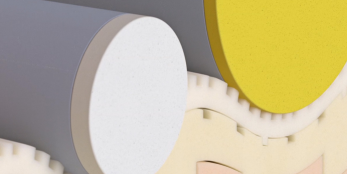
Covestro developed a transparent coated film based on its water-based INSQIN® PU technology, using Impranil® DLC-F as the basis for the coating formulation. This water-based polyurethane dispersion is often used in topcoats for automotive interior textile coatings.
With this formulation, a durable, fully transparent film can be created. In Marquardt’s The Centum car, this preserved the look and feel of PU-coated automotive textiles, while allowing the vivid colors of E Ink’s embedded display to be clearly visible.
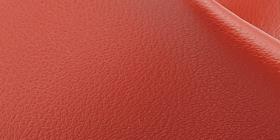
Standard textile coating with waterborne INSQIN® technology vs. transparent coated synthetic film
Key benefits
Transparent: Fully transparent coated synthetic allows E Ink display colors to be clearly visible.
Authentic haptics: Premium look and feel of PU-coated automotive textiles.
High-performance: Offers abrasion and hydrolysis resistance, flexibility, and durability.
Adaptive: Enables responsive color-changing surfaces to be integrated into car interiors.









.jpg?h=140&w=280&rev=06b6a249fa924b5aac3da23d73d3fd02&hash=347F217EBFD4FEFE2B04ABBD5AC0412B&usecustomfunctions=1¢ercrop=1)